The personality difference that controls your weekends
Extraversion differences predict how couples spend their free time, and why it keeps causing the same quiet disappointment.
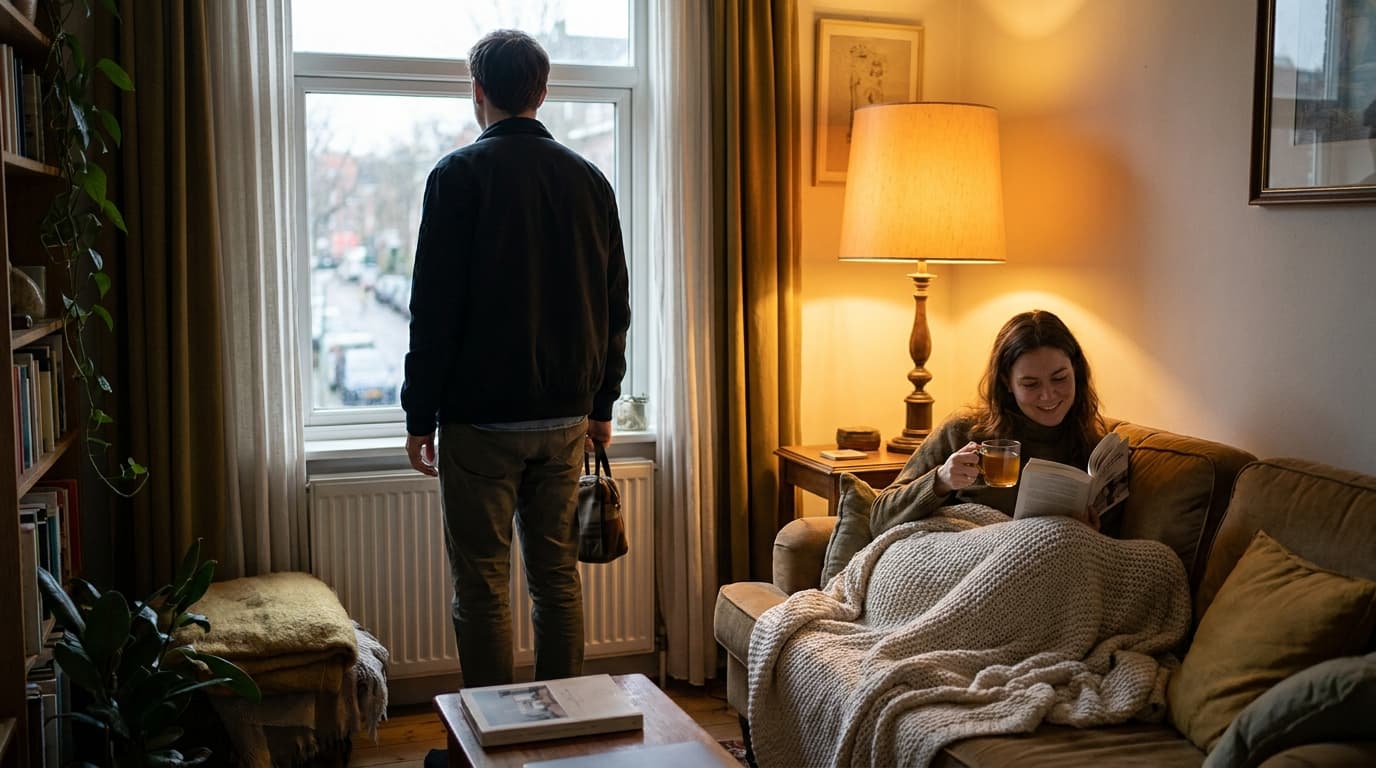
It's Friday at 6pm. One of you is already texting friends about dinner plans. The other is quietly hoping tonight involves the couch, a show, and absolutely no one else.
Nobody's wrong here. But somebody's going to be disappointed.
This happens every week in millions of relationships, and most couples chalk it up to mood or tiredness or "we just need to communicate better." But there's a personality trait that predicts this exact pattern with uncomfortable accuracy. It's called extraversion, and it's probably shaping more of your relationship than you realize.
Extraversion isn't what you think it is
Most people think extraversion means outgoing and introversion means shy. That's a surface-level read. What extraversion actually measures is where your nervous system gets its energy.
People high in extraversion are wired to seek stimulation. Social interaction, new environments, activity, noise. That stuff charges them up. People low in extraversion (introverts, in everyday language) get drained by the same input. They need quiet, solitude, and familiar environments to recharge.
This isn't preference. It's physiology. Introverts have higher baseline cortical arousal, which means external stimulation tips them into overload faster. Extraverts have lower baseline arousal, which means they actively need to seek out more input just to feel normal.
When two people with different set points on this trait share a life, they're going to want fundamentally different things from their downtime. Every single week.
The three fights you keep almost having
The introvert-extrovert tension in couples rarely explodes into a real argument. It's more like a low-grade disappointment that shows up in predictable places.
Friday night and the weekend standoff
This is the obvious one. The extravert wants plans. The introvert wants to decompress after five days of performing at work. Neither one is being unreasonable. But the extravert reads "I want to stay home" as rejection, and the introvert reads "let's go out" as a demand on energy they don't have.
What makes this worse is that the extravert genuinely feels better after socializing. So from their perspective, staying home isn't just boring, it feels wrong. Like something is missing. The introvert, meanwhile, genuinely feels worse after a night out. Not because the people were bad. Because the stimulation was too much.
How you recharge after a hard day
Your partner walks in the door after a terrible Tuesday. You want to help. If you're the extravert, helping means talking it through, going for a walk together, maybe calling a friend. If you're the introvert, helping means being left alone for 45 minutes first.
This mismatch creates a weird dynamic where both people are trying to give the other what they themselves would want. The extravert talks at the introvert who needs silence. The introvert gives space to the extravert who interprets that as coldness. Both people mean well. Both people miss.
Vacations that satisfy nobody
Extraverts want to explore, meet people, pack the itinerary. Introverts want fewer locations, more depth, and at least a few hours of doing nothing. This conflict doesn't usually surface during planning. It surfaces on day three when one person is exhausted and the other is just hitting their stride.
The real problem with vacation conflict isn't logistics. It's that each person comes home feeling like the trip wasn't restorative. The extravert didn't get enough stimulation. The introvert didn't get enough rest. Nobody's recharged, and now you're both starting the work week running on empty.
Why it feels personal (but isn't)
Here's the part that trips most couples up. When your partner doesn't want to do the thing you need, it feels like they don't care about what matters to you.
The introvert thinks: they know I'm drained, and they're still pushing me to go to this dinner party. Do they just not respect my limits?
The extravert thinks: I've been home all weekend and they haven't once suggested doing something together. Do they even want to spend time with me?
Both of these interpretations are wrong, and both of them feel completely real in the moment. That's because extraversion differences don't look like a personality clash from the inside. They look like a caring problem. It feels like your partner could give you what you need, and they're choosing not to.
They're not choosing. Their nervous system is doing what it's built to do, same as yours. The extravert who wants to go out isn't being inconsiderate. They're trying to regulate their own energy levels. The introvert who wants to stay home isn't being cold. They're at capacity.
Once couples understand this isn't a willingness problem, the resentment starts to lose its grip. Not completely. But enough to change the conversation.
What actually works
"Compromise" is the generic advice everyone gives for this. It's also unhelpful because splitting the difference just means both people are mildly unhappy all the time. Here's what actually makes a difference.
Name the trait, not the behavior
Stop arguing about whether to go to the party. Start talking about where you each are on the energy spectrum right now. "I'm at a 3 out of 10 for social energy tonight" communicates something completely different from "I don't want to go." One is a statement about your internal state. The other sounds like a veto.
Parallel socializing
The extravert goes to the dinner. The introvert stays home. You both do the thing you actually need, and nobody has to pretend they're enjoying something they're not. A lot of couples resist this because it feels like they should want to do everything together. You don't. And you'll actually enjoy each other more when you're both recharged.
The two yeses rule
For social commitments that involve both of you, both people need to genuinely say yes. Not "I guess." Not "fine." If one person isn't a real yes, it's a no for both. This sounds restrictive, but it actually reduces resentment. The introvert stops feeling dragged to things. The extravert stops feeling guilty for wanting to go. You both know that when you do go out together, the other person actually wants to be there.
Separate recharging rituals
This one is simple but couples skip it constantly. Each person needs protected time to recharge in their own way. For the extravert, that might mean a standing Tuesday night with friends. For the introvert, that might mean an hour alone after work before engaging. Build these into the routine. Don't make them negotiable.
The trait nobody fights about (but should probably talk about)
Extraversion is the most visible personality trait in daily life. You can't hide it. It shows up in how you spend every evening, every weekend, every vacation. But couples rarely discuss it directly because neither person thinks they're doing anything unusual. The extravert thinks wanting to go out is normal. The introvert thinks wanting to stay in is normal. Both are right.
The couples who handle this well aren't the ones who magically want the same things. They're the ones who've stopped assuming the other person's needs are a comment on the relationship. Your partner wanting to stay home on Friday isn't a rejection. Your partner wanting to go out isn't a demand. It's just two different nervous systems trying to do their job.
The more accurately you understand where you each fall on the extraversion spectrum, the less time you spend interpreting normal personality differences as relationship problems.
If you're curious where you and your partner actually land, take the Deep Personality assessment. It measures extraversion alongside the other Big Five traits and shows you exactly where the gaps are. Knowing the numbers makes the Friday night conversation a lot easier.